Religious discrimination at work touches more people than you might think and California law is stepping up in ways that surprise many employees. But while most assume religious bias only affects hiring or firing the truth is much broader. Employers must accommodate religious practices unless it creates an undue hardship and that rule applies to everything from dress codes to scheduling and grooming. Most people never realize just how many protections exist or how powerful their options can be when facing discrimination based on what they believe.
Table of Contents
- Understanding Religious Discrimination In The Workplace
- Legal Protections For California Employees
- Handling Retaliation, Harassment, And Wrongful Termination
- Seeking Legal Help And Next Steps
Quick Summary
| Takeaway | Explanation |
|---|---|
| Know your rights against discrimination. | California laws protect employees from religious discrimination, ensuring the right to practice beliefs freely at work. |
| Employers must accommodate religious practices. | Employers are required by law to make reasonable accommodations unless it causes undue hardship to the business. |
| Document everything related to discrimination. | Keep detailed records of incidents, including dates, statements, and potential witnesses to support your case. |
| Report harassment and retaliation immediately. | Report any workplace discrimination or retaliation to protect your rights and seek appropriate redress in a timely manner. |
| Seek legal assistance promptly. | Consult employment law professionals as soon as possible to evaluate your case and understand your options for recourse. |
Understanding Religious Discrimination in the Workplace
Religious discrimination in the workplace represents a serious violation of employee rights that can profoundly impact an individual’s professional and personal life. At its core, this form of discrimination occurs when an employee experiences unfavorable treatment based on their religious beliefs, practices, or affiliations. Understanding the nuanced landscape of religious discrimination is crucial for California workers seeking to protect their fundamental rights.
Legal Foundations of Religious Protection
The legal framework protecting employees from religious discrimination is robust and multifaceted. According to the U.S. Equal Employment Opportunity Commission, Title VII of the Civil Rights Act of 1964 explicitly prohibits employers from discriminating against individuals because of their religion. This protection extends far beyond traditional religious practices and encompasses sincerely held moral or ethical beliefs. In California, these protections are even more comprehensive.
The California Civil Rights Department mandates that employers must accommodate an employee’s religious dress, grooming practices, and observances unless doing so would create an undue hardship for the organization. This means workers have the right to maintain religious attire like head coverings, maintain specific grooming standards, and observe religious holidays without fear of professional repercussions.

Recognizing Workplace Religious Discrimination
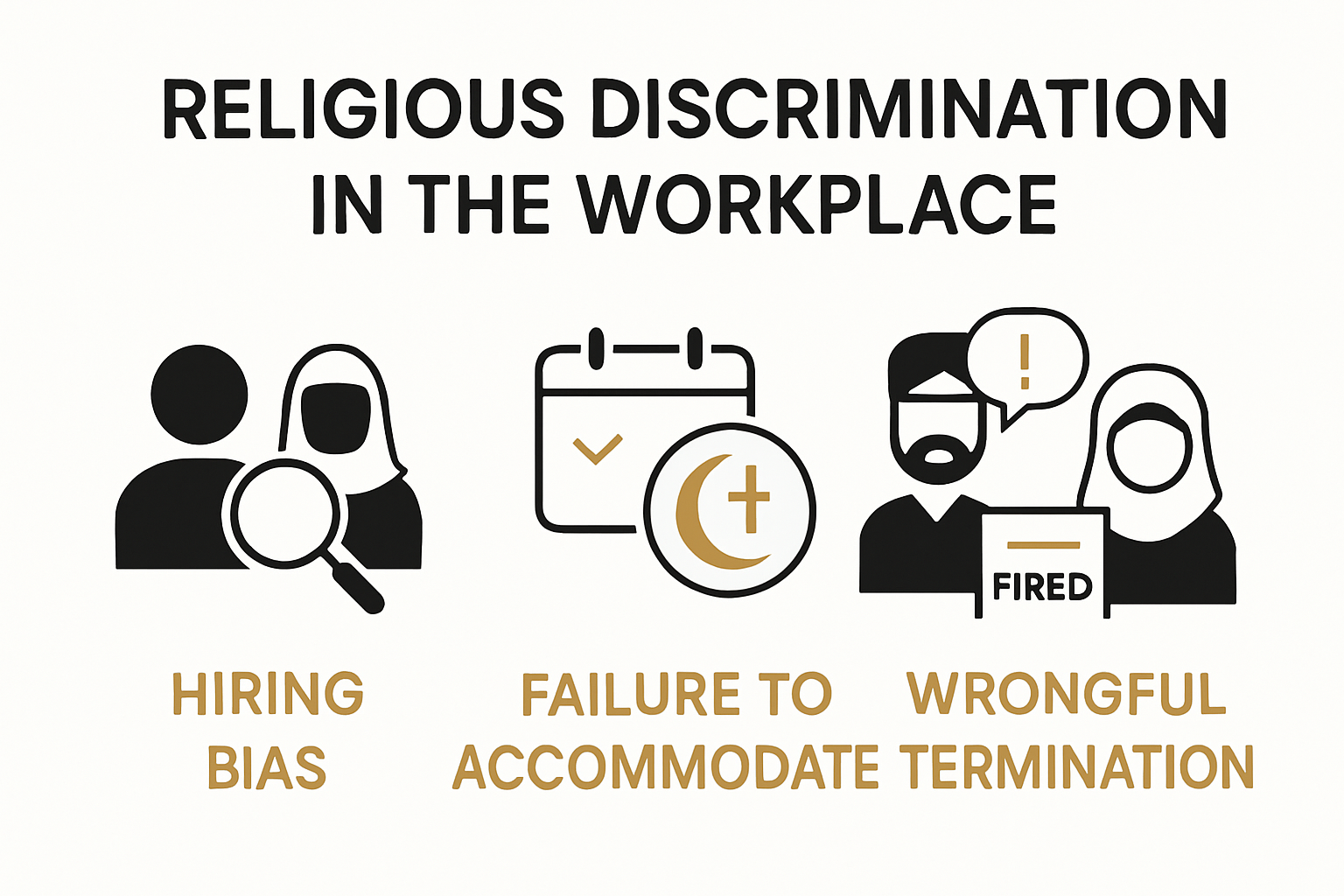
Religious discrimination can manifest in numerous subtle and overt ways. Employees might experience discrimination through harassment, denial of reasonable accommodations, unfair scheduling that conflicts with religious observances, disparaging comments about religious beliefs, or being passed over for promotions due to religious affiliation. These actions create a hostile work environment that undermines an individual’s professional dignity and violates fundamental employment rights.
Specifically, employers cannot make employment decisions based on religious preferences. This includes hiring, firing, promotions, job assignments, compensation, or any other aspect of employment. If an employer demonstrates a pattern of excluding or marginalizing employees based on their religious identity, they may be engaging in illegal discriminatory practices.
For workers in diverse regions like Ontario, Pomona, Rancho Cucamonga, and throughout Los Angeles County, understanding these protections is essential. Learn more about workplace discrimination rights to ensure you can confidently assert your legal protections and maintain a respectful, inclusive work environment. Religious diversity should be celebrated, not punished, and California law provides strong mechanisms to prevent and address workplace religious discrimination.
If you believe you have experienced religious discrimination, documenting specific incidents, gathering potential witness statements, and consulting with an employment law professional can help you understand your options and potential legal recourse.
Legal Protections for California Employees
California provides comprehensive legal protections for employees facing religious discrimination, establishing some of the most robust workplace rights in the United States. These protections go beyond federal guidelines, offering employees multiple layers of defense against discriminatory practices and ensuring workers can practice their religious beliefs without fear of professional retaliation.
Comprehensive State and Federal Safeguards Against Religious Discrimination
The legal framework protecting employees from religious discrimination is multifaceted, combining both federal and state regulations. According to the U.S. Equal Employment Opportunity Commission, Title VII of the Civil Rights Act of 1964 provides fundamental protections against workplace religious discrimination. In California, these protections are significantly expanded by the Fair Employment and Housing Act (FEHA), which offers even more comprehensive coverage.
The California Civil Rights Department enforces FEHA, which applies to employers with five or more employees. This law requires employers to provide reasonable accommodations for employees’ religious practices unless doing so would cause undue hardship. This means workers have the right to maintain religious attire, observe religious holidays, and follow specific religious grooming practices without facing professional penalties.
Reasonable Accommodations and Employee Rights
Reasonable accommodations are a critical component of religious discrimination protections. Employers must engage in an interactive process with employees to find suitable accommodations for religious practices. This might include flexible scheduling, voluntary shift substitutions, or modifications to workplace policies. Learn more about workplace protection strategies to understand the full scope of your rights.
The legal protections extend beyond simple accommodation. Employers are prohibited from making employment decisions based on religious beliefs. This comprehensive protection covers all aspects of employment, including hiring, firing, promotions, job assignments, and compensation. Any pattern of exclusion or marginalization based on religious identity can be considered illegal discrimination.
Importantly, these protections are not limited to mainstream religious practices. They cover a broad range of sincerely held religious, moral, and ethical beliefs. This inclusive approach ensures that employees from diverse religious backgrounds are protected, recognizing the rich cultural and spiritual diversity of California’s workforce.
Employees who experience religious discrimination have multiple avenues for recourse. This can include filing complaints with the California Civil Rights Department, the Equal Employment Opportunity Commission, or pursuing legal action through the court system. Documentation of discriminatory incidents, including dates, specific actions, and potential witnesses, can be crucial in building a strong case.
For workers in regions like Ontario, Pomona, Rancho Cucamonga, and throughout Los Angeles County, understanding these legal protections is essential. The law provides powerful mechanisms to prevent and address religious discrimination, ensuring that workplaces remain respectful, inclusive, and free from bias based on religious beliefs.
To help clarify the distinctions between federal and California state protections against religious discrimination, the following table provides a side-by-side summary of key aspects:
| Legal Protection Aspect | Federal (Title VII) | California (FEHA) |
|---|---|---|
| Coverage | Employers with 15+ employees | Employers with 5+ employees |
| Enforcing Agency | EEOC | California Civil Rights Department (CRD) |
| Reasonable Accommodation Requirement | Yes, unless undue hardship | Yes, unless undue hardship (often more rigorous) |
| Scope of Protected Beliefs | Sincerely held religious, moral/ethical | Sincerely held religious, moral/ethical (inclusive) |
| Types of Accommodation Covered | Dress, grooming, observance | Dress, grooming, observance, broader accommodations |
| Remedies | Reinstatement, damages, attorney’s fees | Reinstatement, damages, attorney’s fees, state remedies |
Handling Retaliation, Harassment, and Wrongful Termination
Employees who experience religious discrimination often face additional challenges, including potential retaliation, harassment, and wrongful termination. Understanding how to recognize, document, and respond to these complex workplace situations is crucial for protecting your professional rights and personal dignity.
Identifying and Documenting Workplace Harassment
Workplace harassment related to religious discrimination can take many forms, ranging from subtle microaggressions to overt discriminatory behavior. According to the U.S. Equal Employment Opportunity Commission, employers are legally liable for harassment that creates a hostile work environment or results in tangible employment actions. This includes derogatory comments, exclusionary practices, mockery of religious practices, or creating an intimidating workplace atmosphere.
Documenting incidents of harassment is critical. Employees should maintain a detailed record including dates, specific statements, potential witnesses, and the context of each incident. Written communication, emails, and contemporaneous notes can provide valuable evidence if legal action becomes necessary. Learn more about challenging workplace misconduct to understand your comprehensive legal options.
To assist with tracking discrimination or harassment incidents, here’s a checklist table summarizing essential documentation steps you should take:
| Step | Description | Completed? |
|---|---|---|
| Record dates and times | Log each incident occurrence | |
| Note individuals involved | Document names of all parties and witnesses | |
| Detail statements and behavior | Write down discriminatory words or actions | |
| Collect written communication | Save emails, texts, and messages related to incidents | |
| Keep contemporaneous notes | Write notes immediately after each event | |
| Gather supporting documents | Save performance reviews, memos, relevant files | |
| Organize evidence chronologically | Order records to show progression or pattern |
Protecting Against Retaliation and Wrongful Termination
The California Civil Rights Department explicitly prohibits employers from retaliating against employees who assert their rights or file discrimination complaints. Retaliation can manifest in various ways, including demotion, reduced hours, salary cuts, negative performance reviews, or termination after an employee reports religious discrimination.
The Retaliation Complaint Investigation Unit of the California Labor Commissioner’s Office provides additional protections, investigating complaints where employees have been penalized for exercising their legal rights. Employees are protected when they file internal complaints, speak with human resources, or pursue external legal actions related to religious discrimination.
Wrongful termination specifically occurs when an employee is fired for reasons that violate public policy or anti-discrimination laws. In the context of religious discrimination, this might involve firing an employee for requesting religious accommodations, wearing religious attire, or observing religious practices. California law provides robust protections against such discriminatory actions, allowing employees to seek legal recourse, including potential reinstatement and compensation for lost wages and emotional distress.
For workers in regions like Ontario, Pomona, Rancho Cucamonga, and throughout Los Angeles County, understanding these protections is essential. If you believe you have experienced retaliation or wrongful termination due to religious discrimination, consulting with an employment law professional can help you evaluate your case and determine the most appropriate course of action.
Navigating workplace discrimination requires courage, documentation, and a clear understanding of your legal rights. By knowing the available protections and being prepared to assert them, employees can challenge discriminatory practices and work towards creating more inclusive, respectful professional environments.
Seeking Legal Help and Next Steps
When religious discrimination threatens your professional livelihood, taking strategic and informed action is crucial. Navigating the legal landscape requires careful preparation, understanding of your rights, and a methodical approach to seeking justice and resolution.
Preparing Your Documentation and Evidence For Religious Discrimination
Building a strong case begins with comprehensive documentation. According to the California Civil Rights Department, employees should collect and organize evidence that demonstrates discriminatory treatment. This includes detailed records of incidents, emails, performance reviews, witness statements, and any communication related to religious discrimination.
Professional documentation should include specific dates, times, locations, individuals involved, and a clear narrative of how your religious beliefs or practices were targeted. Contemporaneous notes made during or immediately after discriminatory incidents can provide powerful evidence. Digital communications, like emails or text messages, can also serve as critical documentation of harassment or discriminatory behavior.
Filing Administrative Complaints and Legal Proceedings
Employees have multiple avenues for addressing religious discrimination. The U.S. Equal Employment Opportunity Commission provides formal channels for filing complaints, including administrative processes before pursuing litigation. In California, employees can file complaints with both state and federal agencies.
The California Civil Rights Department allows employees to submit complaints online or in person, investigating potential violations of the Fair Employment and Housing Act. The EEOC offers similar federal-level complaint mechanisms. Understand your comprehensive legal options to determine the most effective strategy for your specific situation.
Consulting Employment Law Professionals Regarding Religious Discrimination
Employment law attorneys specializing in workplace discrimination can provide invaluable guidance. These professionals understand the nuanced legal landscape and can help evaluate the strength of your case, advise on potential strategies, and represent your interests throughout administrative and legal proceedings.
During initial consultations, attorneys will typically review your documentation, assess the evidence of religious discrimination, and outline potential courses of action. This might include negotiating with your employer, filing administrative complaints, or pursuing litigation. Many employment law firms offer free initial consultations, allowing you to explore your options without immediate financial commitment.
For workers in regions like Ontario, Pomona, Rancho Cucamonga, and throughout Los Angeles County, local employment law attorneys understand the specific legal context and can provide tailored advice. They can help navigate the complexities of state and federal regulations, ensuring your rights are comprehensively protected.
Remember that time is critical in discrimination cases. California and federal laws have strict filing deadlines for administrative complaints and legal actions. Waiting too long can potentially compromise your ability to seek justice. Consulting with an employment law professional promptly can help preserve your rights and develop an effective strategy for addressing religious discrimination in your workplace.
Frequently Asked Questions
What constitutes religious discrimination in the workplace?
Religious discrimination occurs when an employee is treated unfavorably because of their religious beliefs, practices, or affiliations. This includes harassment, unfair scheduling, and denial of reasonable accommodations.
Are employers required to provide reasonable accommodations for religious practices in California?
Yes, California law mandates that employers accommodate employees’ religious practices, such as dress codes and scheduling, unless it would cause undue hardship to the business.
How can an employee document religious discrimination incidents?
Employees should keep detailed records of discriminatory incidents, including dates, times, specific statements, and potential witnesses. Written communication and contemporaneous notes can also serve as important evidence.
What steps can I take if I experience religious discrimination at work?
First, document all incidents of discrimination. Then, report the behavior to your employer and consider filing a complaint with the California Civil Rights Department or the Equal Employment Opportunity Commission. Consulting with an employment law professional is also advisable.
Stand Strong Against Religious Discrimination at Work
You should never have to sacrifice your beliefs or face unfair treatment on the job. If you have felt isolated or targeted because of your religious practices at work, it is not just wrong, it is against California law. Many employees face obstacles like denied accommodations, harassment for their dress or observances, unfair scheduling, or even wrongful termination. Your voice deserves to be heard and your rights must be protected. For those who need guidance and support, our team understands both the legal landscape and how these struggles can affect your daily life.
Take control of your situation before it gets worse. Our attorneys focus on religious discrimination cases and have helped employees just like you throughout California. For comprehensive resources and immediate help, visit our Discrimination page, or go straight to Huprich Law Firm and connect with a dedicated employment lawyer who truly understands your challenges. Do not wait while your well-being and career are on the line. Reach out today and protect your rights for a better workplace tomorrow.
Recommended
- Discrimination at Work California: What You Need To Know
- Understanding Religious Discrimination in the Workplace
- Employment Law for Racial Discrimination in California
- Big Facts About Sexual Orientation Discrimination at Work